
Even as a child, I felt the importance of connection and understood that it was something that you build on purpose. I can still hear both my mom and my aunt singing, “I love you a bushel and a peck,” while bouncing me on their knees. So, twelve years ago, when I accepted the role to develop and lead the Bonding Strategy at Einhorn Collaborative to strengthen the emotional connection between children and their parents, it felt like a dream come true. And as I write this today, I feel the same sense of wonder and gratitude in my new role as Deputy Director. I get to carry my childhood belief and my first-day excitement to this new position. It’s thrilling to help shape the trajectory of our organization, alongside our Founder & Trustee David Einhorn, our Executive Director Jenn Hoos Rothberg, and my colleagues.
For the past six years, I have held an unofficial title: Team Captain of Culture. Building our culture was never part of my official job description, but I kept raising my hand to be more involved because I love building relationships and fostering a sense of belonging. (I also plan a pretty amazing party.) This role gave me a front-row view into how Jenn intentionally built our team culture and taught me things that often don’t show up in formal training: how to notice when the room feels off before anyone says anything, how to hold space for a difficult conversation, how to celebrate the small repairs that keep our team whole.
We strive for a healthy culture instead of a perfect one, placing high importance on trusting relationships, nimbleness, and learning and improvement.
We share responsibility across our small and mighty team; any win is everyone’s win, and any challenge starts with, “How can I help?” We also recognize that the occasional oops and ouch are typical of any relationships, especially with people with whom you spend 40+ hours a week, so we spend time listening, reflecting, and repairing when mishaps happen. That way, we have the relational trust necessary to work on initiatives that require effective collaboration in order to make positive change in the world.
What does that look like in action?
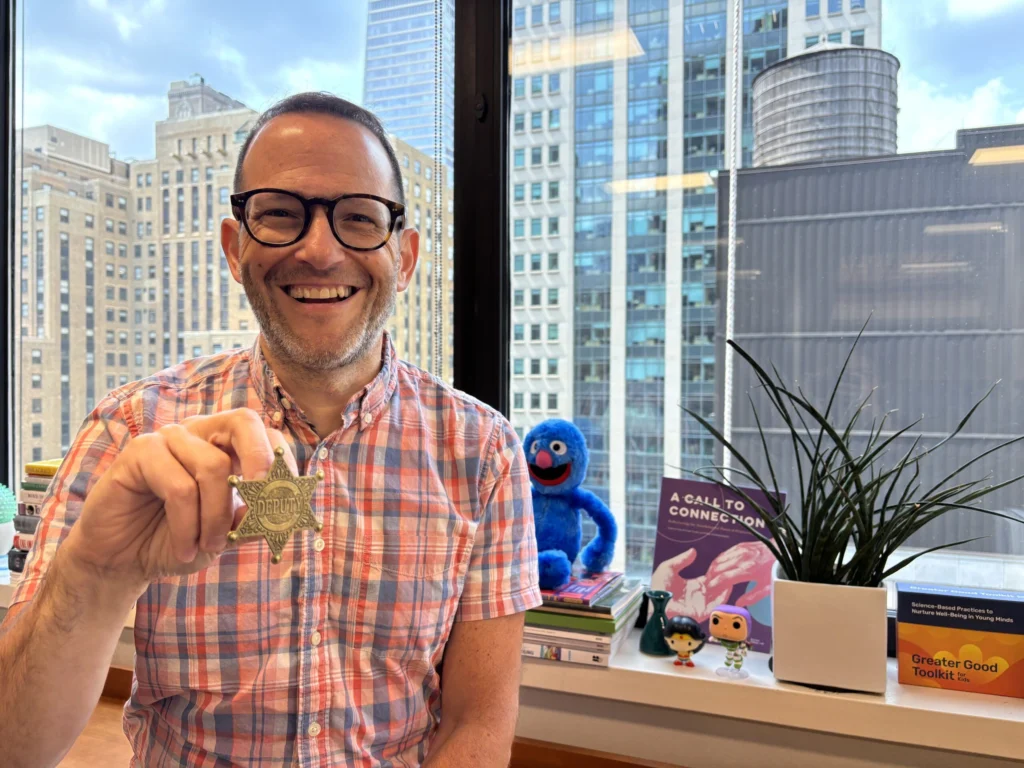
We share responsibility across our small and mighty team; any win is everyone’s win, and any challenge starts with, ‘How can I help?’
A few months ago, some team members sat down for a meeting they had not prepped for together. The meeting got a little awkward due to mismatched expectations. One team member showed up ready to ask a lot of questions, which is often how she engages when she wants to understand something fully. Another team member had expected her to listen and observe instead. This led to some friction during the meeting, subtly felt by everyone in the room.
Afterward, we flexed a muscle we have practiced for years now: we circled back. One person reached out to the other and said, “Hey, that didn’t go the way either of us hoped. Can we talk about it?” That conversation happened quickly and in person, because we believe that some repairs work better when you can visibly see a shoulder relax.
We also hold ourselves to a simple rule: If something bothers you, you have 24 hours to bring it up. After that, you let it go. This small rule has saved us from the thing that used to happen here more than I’d like to admit: circling back too late, or not at all, and letting conflict, upset, or resentment fester instead.
It’s typical to see lessons learned from “circle backs” turning into new habits for the team. From this instance, we agreed to build in prep time or align on expectations to help everyone feel more connected to each other and work together better. That’s what a day in the office looks like: learning together, holding space for constructive conversations, and having each other’s backs.
A few times a year, we gather for something we call Culture Bright Spots, one of our most valued team rituals, where we capture these moments of learning and improvement so we can properly celebrate them. Jenn read Switch by Chip and Dan Heath years ago, and their idea stuck with us, which is the more you study what’s going well, the more goodness you tend to create. So, throughout the year, our team will share whenever they notice our culture working well: a hard conversation that went better than expected, someone stepping in before they were asked, a great example of circling back.
That’s what a day in the office looks like: learning together, holding space for constructive conversations, and having each other’s backs.
When we sit down as a group to talk through these bright spots, we ask why each one was an upside to our culture, and whether there’s something inside that story worth building into how we work. The purpose is to turn isolated moments of celebration into cultural norms, expectations, and habits — how we work together, day after day.
We also keep a living document of the values (the what) and norms (the how) that guide how we work. Every single person who has joined us over the years has shaped them in some way, questioned one, or offered a different way of working drawn from somewhere else in their life. That’s exactly what I’m looking forward to most as we welcome two new team members, our Strategy Lead, Building Social Trust and Communications & Content Specialist, in the months ahead. They will inherit rituals we have built with care, and I have no doubt they will contribute positively to our culture in ways we haven’t even imagined yet.
If anything about our cultural rituals resonated with you, if you’re excited to bring your perspective to ours, I invite you to apply to either of our open roles.
You can expect to immerse yourself in a culture of coming back to one another, plus a pretty great party or two.