What is one of your earliest memories of the power of human connection?
My early memories of connection are with my grandmother, especially over food. She was an incredible cook. Cooking was really her whole world, and she fed our entire extended family. She cooked in the winter kitchen in the colder months and moved out to the summer kitchen the moment it got warm enough. We ate a lot of fish in the summer, which as a child, I complained a lot about but now can’t get enough of.
I was born in Romania, and Romanian food is unusual even among other Eastern European cuisines. Because the country was so oppressed under communism, its dishes were developed in isolation from outside influence and are therefore really unique. One thing my grandmother and I made together is a special Romanian sweet bread, called cozonac. Cozonac takes a couple of days to make properly, and there’s usually one person in a family who makes it. That was my grandmother. Of her three grandchildren, she passed the recipe down to me. Now one of my three children has taken it over, and she makes it during the holidays.
What values guide your personal life and your work?
Impact, above almost everything else. From a young age, I felt a sense of responsibility that came from being able to learn quickly and do well in school. I always felt that privilege came with the responsibility to use it for good.
Science can be a strange thing with regard to impact. Originally, I came from basic science, which is curiosity-driven. It is about the excitement of solving biological puzzles, but the measurable impact of basic science is cumulative and slow.
Over the last five years, my career has moved away from basic science and toward translational and clinical research. It’s not about individual fulfillment anymore. It’s about impact in the world.
When did a person or experience change your mind about an idea or belief?
I’m an MD-PhD, which means I went though medical school and a PhD back-to-back. It’s long, and it’s painful, and by the end of eight or nine years, most people realize they have to choose one path or the other. I was leaning toward giving up medicine and doing a research fellowship in environmental health instead.
I went to talk it over with Dr. Philip Landrigan, who is one of the most influential thinkers in public health of our time. He was a central figure responsible for bringing the concept that “children are not small adults” into public health and environmental policy. This might not sound like much until you realize what it changed. For example, before that, medication doses for kids were mostly just scaled down from adult doses based on weight. But a child’s metabolism at a given age is fundamentally different, not just scaled down. This paradigm shift officially made children a distinct population, requiring the medical and research community to specifically develop therapeutics, medications, and interventions tailored to children’s own unique biology.
I told Phil I wanted to let go of continuing my medical training and go straight into research. He urged me to at least finish my internship, the first year of residency, so I’d be licensed to practice. He said, “What if something really big happens in the world? Wouldn’t you want to be able to help?”
I ended up finishing the whole residency and becoming a pediatrician. Fast-forward to 2020, COVID happened, and I became the COVID attending physician in the Newborn Medicine Unit at the NewYork-Presbyterian Morgan Stanley Children’s Hospital. That changed the entire course of my career. What Phil had asked all those years prior resonated with me through time: I really did want to help.
That’s when I started doing human research in earnest, first looking at the effects of in-utero COVID exposure, which grew into the work I do now on early relationships between children and caregivers.
What are you working on right now?
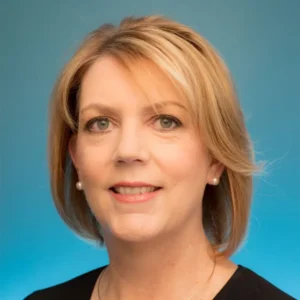
As the inaugural director of the David M. Einhorn Institute for Early Relational Health at Children’s Hospital of Philadelphia (CHOP), my job is to advance the science of early relational health to transform pediatric practice. Pieces of this work have existed within child development, psychology, pediatrics, and other areas of research, but no field has really focused on the space between a parent and child. Science has so far primarily investigated the parent and the child as separate individuals. The goal is to bring together faculty across sociology, psychology, pediatrics, medicine, engineering, and other disciplines to build a fundamentally dyadic field from the ground up.
One piece of that work is the research itself. We just entered year four of a ten-year research effort to understand the “taxonomy” of early relationships. For a long time, the field has treated constructs like attachment, bonding, maternal sensitivity, and emotional connection as though they are all measuring roughly the same thing. What we are finding is that they are not correlated with each other at all, and likely even predict different outcomes.
This is the first cohort study to comprehensively look at relationships through every lens, so we can map how all of these pieces come together and how they shape outcomes for kids later in life.
What is giving you hope? What positive visions do you have for our future?
I feel genuinely privileged to be starting the Einhorn Institute’s work at a moment when relational and emotional health are finally being taken seriously as real, measurable science, not the soft, “feel-good” stuff people used to write it off as.
There’s recognition now that without strong relationships and social connection, people die earlier and develop more chronic conditions, from high blood pressure to diabetes. I’m glad to be building this now, rather than 20 years ago, when that recognition wasn’t there yet.
If you ask me to describe what success would look like five or ten years from now through our work at the Einhorn Institute, it’s that we have helped bring about a more connected world. We currently live in an increasingly divisive one, especially since the pandemic, with a real rise in loneliness. If we’re successful, we’ll start reversing that trend, with population-level benefits.
More Through the Prism Interviews