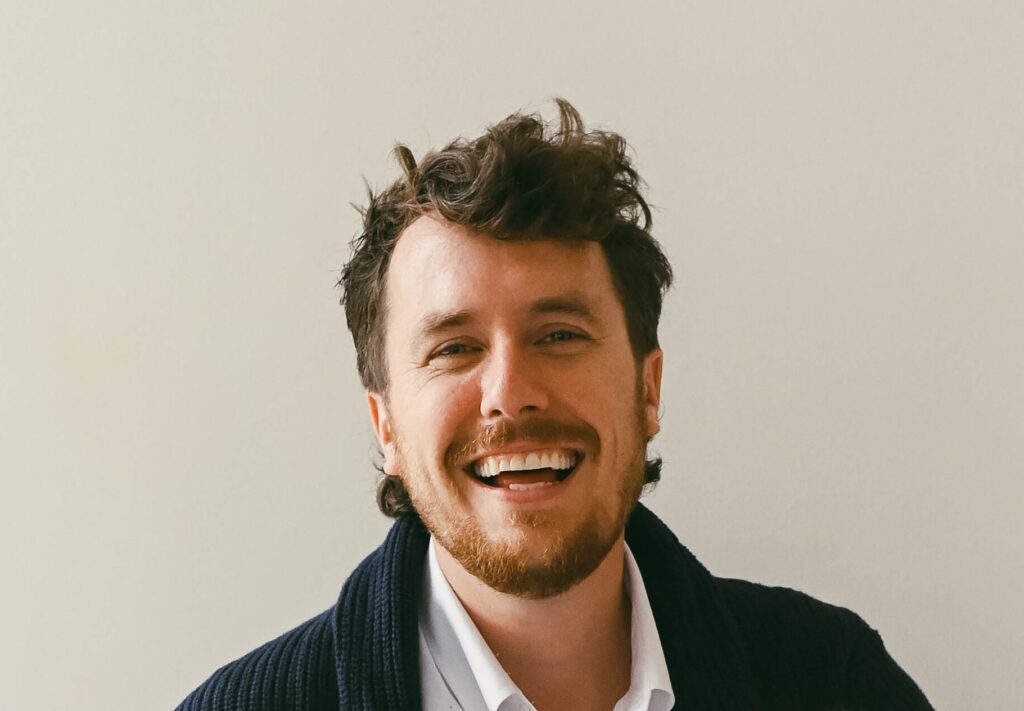
What is one of your earliest memories of the power of human connection?
The earliest memory that comes to mind is fourth grade. My dad was in the military, so we moved around a lot, especially through elementary and middle school. In fourth grade, I started the new school year at a brand-new school in Clarksville, Tennessee, right after a year of homeschooling. I was dreading that first day, but almost as soon as I walked in, a classmate came up and started talking to me.
The power of that moment was twofold: it helped me not feel so terrified of being the new person or the stranger in the room, and it taught me that once I became part of a group, I had a responsibility of welcoming others.
That early experience of being welcomed, and later paying it forward, shaped how I think about human connection and how I try to raise my daughter. She’s about to start kindergarten this September, and I try to model the value of being welcoming and taking the time to reach out to people who are new in our group or community.
What values guide your personal life and your work?
Three values stand out for me: conscientiousness, service, and learning.
Conscientiousness is the biggest one. I want to be known as someone who does what they say they are going to do, is thoughtful in execution, and is cognizant of how my actions affect others and the organization as a whole. That holds true both at work and in my personal life. I want to be seen as dependable and as someone with integrity.
Being of service to others has been a huge part of my life, stemming from my family’s history of military service and carried forward into my own path in public and civic life.
The third is learning. My curiosity pulls me toward whatever is on the other end of a learning tree. I believe that acquiring knowledge is valuable in itself, but it also fuels self-improvement and better relationships with others.
During my time at Einhorn Collaborative, the mission of helping people get along better and the idea of being a bridge-builder and peacemaker across lines of difference became part of my DNA. Just as important was the culture created by the rest of the team: walking into work and feeling safe and finding real joy in the work and the people around you. That was such a formative experience early in my career that I’ve tried to replicate it everywhere I’ve worked since.
When did a person or experience change your mind about an idea or belief?
There wasn’t a single epiphany, but my two years of service with City Year stand out. AmeriCorps generally, and City Year specifically, intentionally bring people from different backgrounds into service together to do something greater than themselves.
Going in, I hadn’t had much exposure to people who had different backgrounds or looked different from me; my K-12 education, even as we moved around, and my college years in central Pennsylvania were fairly homogeneous. Once I got to City Year, working alongside people from different racial, socioeconomic, regional, and immigration backgrounds, I realized how many assumptions I’d unconsciously carried around about people.
Sharing that experience broke down so many preconceived notions, conscious and unconscious. City Year created intentional spaces for reflection, which made it possible to learn and make mistakes along the way.
I spent that first year teaching in a seventh-grade classroom in Washington, D.C., and the next year training and supporting others doing direct service in classrooms. Working with students whose experiences were so different from mine reinforced what I was learning: showing up wasn’t enough on its own. You need to invest the time learning about someone and being open about yourself before trust and strong bonds can form. That experience confirmed for me that I wanted to spend my career in social impact work.
What are you working on right now?
I learned so much about good grantmaking from Jenn, Ira, Jon, and Itai during my time at Einhorn Collaborative, particularly how to build relationships with partners that are affirming rather than transactional. This quality is rare, even among impactful foundations. I also gained insights from watching them go on deep learning journeys within a portfolio, which shaped how I approach any new subjects.
Today, my work at the Children’s Foundation of Michigan is focused on how we can leverage philanthropy not only to meet the needs of young people today, but to build resources that will support them for generations. We work with donors, nonprofits, and community partners to connect philanthropic resources with opportunities that improve the lives of children across Michigan.
One area of focus is helping nonprofits start and grow their endowments. Through the Michigan Central Station Children’s Endowment Initiative, we work alongside 11 youth-serving organizations in Detroit to strengthen their capacity to fundraise and build permanent endowments for the long term. We’re excited to share what we’ve learned to make endowment-building more accessible to other nonprofits.
Through an initiative called The Coney, which is centered around a celebrity-led homecoming weekend taking place September 2026, we’re raising funds to address urgent arts education needs today and building permanent investment in youth arts education across Detroit.
What connects these efforts is the idea of permanence. So much of philanthropy is focused on immediate needs, and that’s necessary. At the same time, we’re excited by the opportunity to address those needs while also asking what we can build today to create opportunities for young people decades from now.
What is giving you hope? What positive visions do you have for our future?
I’m consistently heartened by how vocal and active young people, ages 14 to 24, are right now even in a tough environment. Their willingness to advocate, not just for themselves but for their whole generation, gives me hope. I see it first- hand following youth organizing efforts here in Detroit, especially around education.
The other thing that gives me hope is a little counterintuitive. Even in the middle of the fastest-moving technological change we’ve seen in a long time, the importance of human connection is being thrown into sharper relief. As much as I appreciate being able to outsource more routine tasks to computers and AI agents, it underscores that there’s a higher calling for us as human beings — a certain kind of work that brings us closer together. The humans in the loop are more important now, not less, and there will be pivotal moments ahead where we’ll need to remember that. As long as we can keep humans central to this process, I feel hopeful about how technology will shape our lives going forward.
More Through the Prism Interviews