
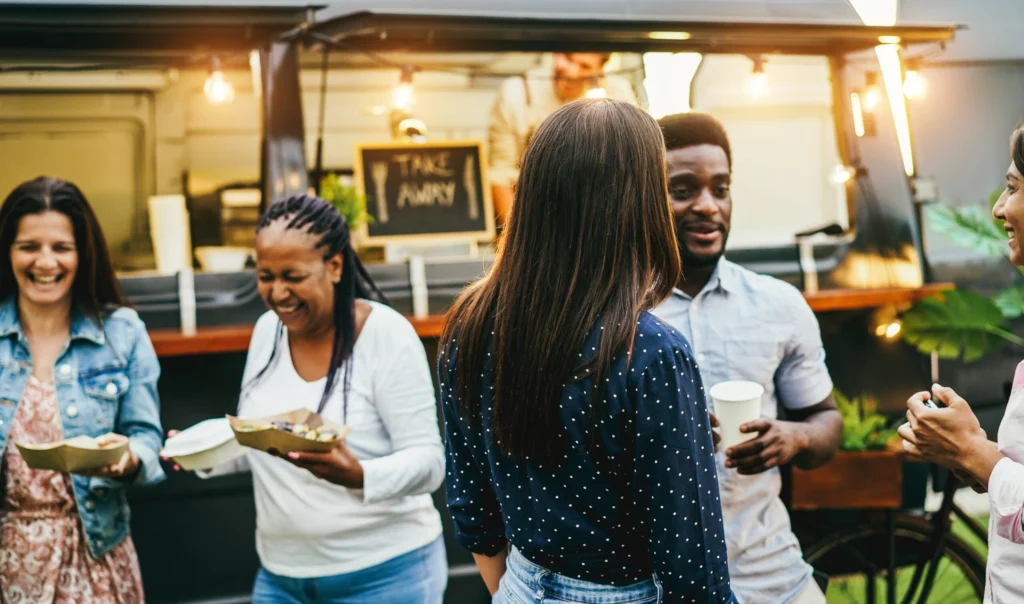
Earlier this month, I had dinner with a dear friend whom I’ve come to love and respect very much. Somewhere in the hours-long conversation over delicious food, a hot-button topic came up, and I suspected we might not see eye to eye. It was the sort of disagreement that has ended friendships for people I know.
Maybe it was the comfort we had built over our earlier conversation about family life, the start of school, and our work — instead of shying away from the topic, we dove into the deep end. With genuine curiosity, we took turns asking questions and sharing how we each arrived at our strongly held beliefs.
Neither of us changed the other’s mind, and neither of us was trying to. From a place of deep love and respect, we waded into our differences together. I left dinner that night feeling enormous gratitude for my friend, who trusted me with parts of herself she could easily have kept hidden. She loved me and valued our relationship enough to show me where her convictions come from. Just as graciously, she was eager to hear about the origins of mine.
That dinner stayed with me because of what is coming next. Just a few days from now, on November 3rd, we will head to the polls for the midterm elections. Some of our family, friends, neighbors, and colleagues will celebrate the results, while others will grieve them. No matter the outcome, we will still share the same spaces: the office kitchen, the school pickup line, the family group chat, and, just a few weeks later, the Thanksgiving table.
Those shared spaces are why I keep returning to a lesson from the last decade of my bridge-building work: the choices we make in the voting booth are a crude snapshot of who we are as individuals and as a people. A vote is a single data point that can’t capture the complex layers underneath.
That lesson took root in the aftermath of the 2016 election. In the weeks that followed, our phones at Einhorn Collaborative were ringing off the hook. Long-time grantee partners and social entrepreneurs who deeply cared about trust, connection, and belonging and who understood our mission kept calling with the same question: How do we come back together as Americans?
66% of Americans believe they can learn something valuable from connecting with people who are different from them, and 70% feel a responsibility to do so.
One group had a beautifully simple answer: Host 100 dinners across the country before the inauguration, each one bringing together neighbors who had voted differently to sit around a table and talk about the country they would share going forward. It was called The People’s Supper. The idea took off. By the end of the initiative, more than 1,500 meals had been hosted in more than 120 cities and towns to nurture and repair relationships across political and ideological differences.
That effort became part of what we called our Post-Election Fund, and it marked the beginning of a decade of investing in the bridge-builders and healers who reached for the oldest technology of human connection in moments of rupture.
Research from our partners at More in Common shows that 66% of Americans believe they can learn something valuable from connecting with people who are different from them, and 70% feel a responsibility to do so. That yearning shows up in places like the Team Up Project, led by Interfaith America, the YMCA, Habitat for Humanity, and Catholic Charities, where more than 11,000 people have already come together across lines of difference to serve their neighbors in more than 30 communities across the country.
It shows up in our statehouses, too. Gen Z and millennial legislators, who make up about a quarter of state lawmakers, are eager to work across the aisle to find common ground and solve problems of shared concern. According to Layla Zaidane, President and CEO of Future Caucus, these young politicians and their get-it-done attitude have introduced roughly 40% of the bipartisan bills signed into law. When I read headlines telling us how doomed and broken we are, I think about these young lawmakers raising their hands and practicing collaborative governance together to make a positive difference in the states they represent.
Whether around a statehouse floor or a dinner table, the common thread is a willingness to show up as ourselves and connect with others. Eboo Patel, a friend and long-time collaborator, likes to say that the best metaphor for America is a potluck. Everyone brings something distinct to the table, and together it becomes an even more delicious meal. A melting pot asks us to blend into one flavor. A potluck asks us to show up as ourselves and share with others.
It took me years of practice to build this muscle, and now these conversations are among the greatest joys of my life.
So here is my invitation to you: the weekend after the midterm elections, host a gathering and make it a potluck!
Invite three to six people, or more, who you think may be looking at the results a bit differently than you and ask them to bring a dish that means something special to them. If you want inspiration, check out The People’s Supper Guidebook and the Recipes for Connection booklet from Project Gather, an initiative of former U.S. Surgeon General Dr. Vivek Murthy, for detailed instructions and ideas to get you started.
When you sit down, welcome everyone and let them know that personal reflections — and even politics — are invited to the table. Be willing to ask about and listen to the emotions that rise to the surface for your guests following the elections. Inquire about how they arrived at their beliefs and what they wish the “other side” understood about them. Name the common ground and differences you hear in your guests’ responses out loud, without judgement, to make sure you understand them correctly; others benefit from the clarity, too. I have learned from our work with Resetting the Table that when we skirt a difference, we stay stuck. Naming our differences clearly is how we can find our path forward together.
Hosting like this can feel risky. A fear people often face when engaging across difference is that they don’t want others to assume they hold similar beliefs. I promise that opening up to someone else’s view won’t cost you your convictions. A good argument works the same way. Sharing our perspective with someone who sees things differently and taking the time to hear their reasons why can help us better understand ourselves and even sharpen what we believe. Sometimes, we might even be surprised at the strength of our conviction or the limitation of our horizon. And what a gift it is to learn something new about ourselves and others.
It took me years of practice to build this muscle of curiosity across difference, and now these conversations are among the greatest joys of my life.
If you host a potluck, I’d love to see a photo of the community that showed up around your table and hear the stories that filled the room. (An added bonus, we’ll actively contribute to reversing the decades-long declining trend Derek Thompson recently laid out in his Atlantic article, “Why Americans Stopped Throwing Dinner Parties.”)
As we head into Election Day and the days that follow, I want to leave you with a passage from Eric Liu, CEO and co-founder of Citizen University, from his new book, Live Like a Citizen: 8 Ways to Change Your Mindset and Our Country. Eric writes about how imagining a shared future can help heal American civic life.
Imagine you are not alone. You aren’t.
Imagine you can get better. You can.
Imagine you are from the past. You are.
Imagine you are from the future. You are.
Imagine you make a place breathe. You do.
Imagine you are respected here. You are.
Imagine you can build. You can.
Imagine you can trust. You can.
I’m grateful to exist in this space of imagination with you. And I’m eagerly awaiting stories and reflections of potlucks and dinner parties you will be a part of soon!