
Ask Eric Liu what to do about American democracy, and he will probably start smaller than you expect. Get off your screen and into a conversation with your neighbors. Feel the joy, love, and grief in your life. Join a club.
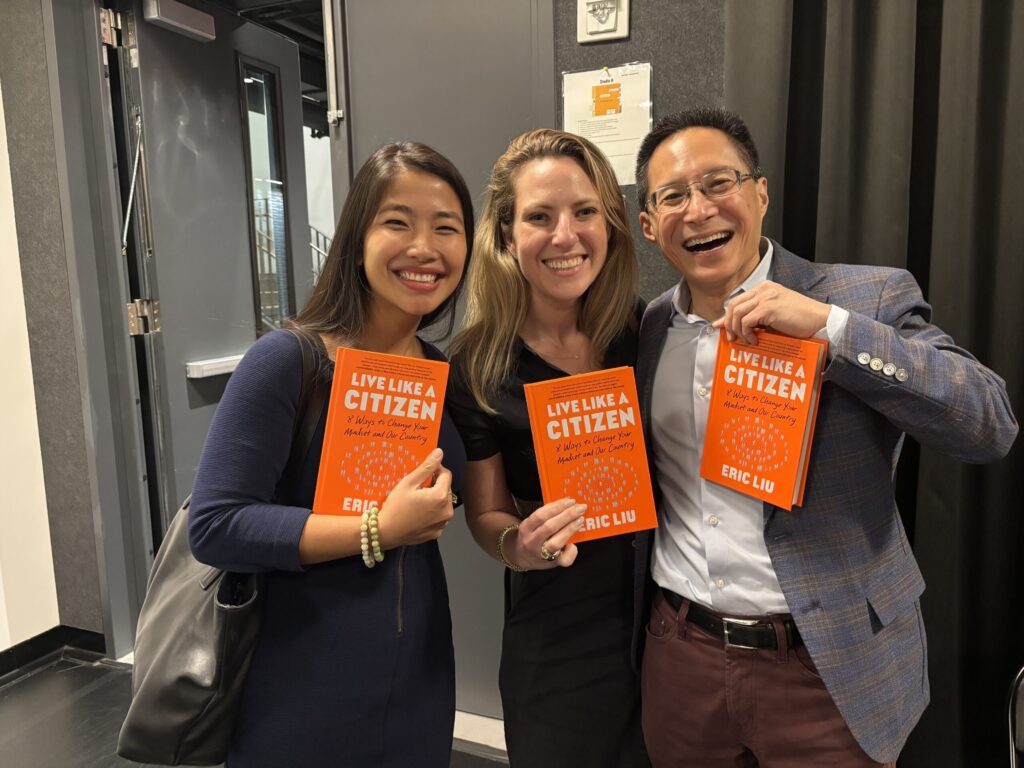
Eric co-founded Citizen University in 2013 with his late wife, Jená Cane. Its programs, like Civic Saturday gatherings, teach people of every background to practice civic power where they live. He served in the Clinton White House as a deputy assistant for domestic policy, and his new book, Live Like a Citizen: 8 Ways to Change Your Mindset and Our Country, came out this month. Each chapter is built around a verb, like see, join, and fight, to help readers build the habits that help them foster trust and connection in their daily lives — the same skills we need to hold a pluralistic society together.
We talked with Eric two weeks before the midterm elections about why he wrote the book and what living like a citizen looks like on either side of Election Day.
This conversation has been edited and condensed.
Einhorn Collaborative: What inspired you to write Live Like a Citizen? Why now?
Eric Liu: The book grew out of a question I kept hearing from people who were anxious and worn down by our politics: “What should I do?” I run Citizen University, and people know I think and write about these topics. At first, I gave practical, tactical answers based on where someone lived and what their situation was.
The more I thought about it, the more I saw a layer beneath political tactics, and beneath even the most consequential elections. It’s the layer we have failed to tend to for much of our lives: how to be with others in a diverse, pluralistic community and still find ways to live together. Not just tolerate each other, but actually live together.
That led me to eight elemental verbs that became the chapters in the book: see, listen, feel, join, fight, change, imagine, and commit. We have forgotten them in everyday life, especially as we have become spectators of national politics — either frozen in despair or caught up in outrage at our screens. The answer to “What should I do?” starts with these habits.
My emphasis on these re-humanizing habits is not to take us away from the fact that there are real crises, real fights happening right now that call for moral discernment. However, it’s precisely during a time like this, when the temptation is to give in to righteous certitude, that we are obligated to practice these habits, so that America doesn’t spin out into disunion. It takes an affirmative effort to hold us together, not in false consensus, but in a mutual agreement to keep on living together.
The depiction of the U.S. in the media leads us to believe that Americans are more divided and polarized than we really are. But I know from my own life and work at Citizen University that bring me into contact with people in many different parts of the country — as well as from public opinion research from More in Common and the Pew Research Center — that most people, most of the time, are trying to make a community work and keep their families afloat. There is far more civic renewal happening in local places than national media would lead us to believe.
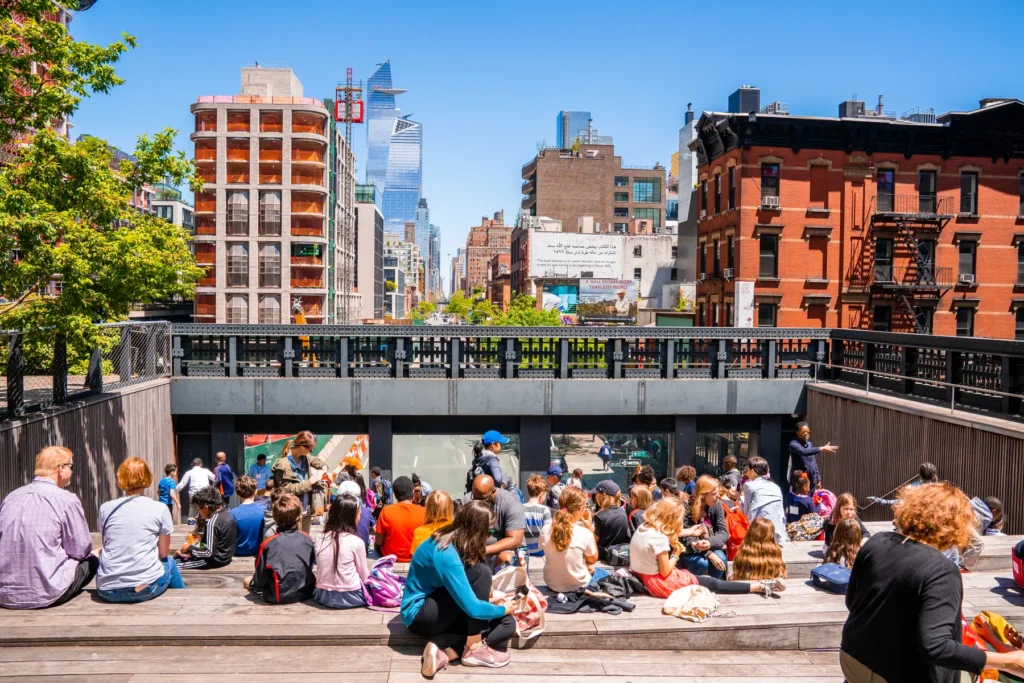
A remarkable group in Akron, Ohio, Civic Saturday Akron, puts all eight verbs into practice. An analog to faith gatherings, the group hosts community conversations where people read civic scripture and turn to each other to ask hard questions about how we are living together, what is hurting in our hearts, and what is hurting in our communities.
Taking inspiration and provocation from these gatherings, Civic Saturday Akron then holds civic fairs where community organizations and clubs set up tables and invite people to join. They have also joined The Longest Table, where several hundred people break bread after a Civic Saturday gathering to connect across every line of difference: ideological, generational, racial, and religious. You can watch a short documentary about Akron’s Longest Table to learn more about how a downtown potluck became a place for Akronites to reckon with challenges in their community, practice civic joy, and build together.
The goal shouldn’t be fewer arguments. It should be healthier, more emotionally intelligent arguments that start with a pre-commitment: even as we fight it out, we still have to live together.
Which of the eight habits do you think Americans need to practice most?
We need these practices in different ways at different times.
Social media has trained us into a flattening, dehumanizing way of seeing, which is why the first chapter is about learning to see one another again.
I believe that joining is pivotal. As noted by the former Surgeon General Vivek Murthy, we are living through an epidemic of loneliness, isolation, and fragmentation, and that has consequences for our public life. When people feel atomized, they start looking for someone to rescue them. We need to rebuild the muscle of joining.
But the chapter on fighting may be the heart of our moment. Some people were surprised that I included it, since they assumed the book was about “everybody should be nicer and get along.” But that’s not my point. Fighting is central to democratic life. Fighting is what happens when you live in a pluralistic, diverse society, because people have different identities, views, and conceptions of what constitutes a good life and the right way to solve any problem.
The goal shouldn’t be fewer arguments. It should be healthier, more emotionally intelligent arguments that start with a pre-commitment: even as we fight it out, we still have to live together. At every scale of union, whether in a relationship, a community, or a country, we’ve got to choose to fight like a citizen and commit to living together.
These habits of the heart and mind cannot be legislated; they are practiced in our relationships with others.
What does living like a citizen look like around an election?
This is a 365-days-a-year book. These norms, habits, and values apply in the run-up to an election, on Election Day, and in the days after. Whether we can live into these practices that I describe in this book changes depending on our surrounding environment and culture.
I encourage us to guard against the dehumanizing and flattening binaries that have poisoned our politics. If we fall into righteous certitude and reflexive scorn for anyone who sees things differently, we will simply reset the dynamic for another round of the same dysfunction, no matter who wins an election. To live like a citizen during election seasons, we have to do two things at once: name what we want to vote against and recommit in daily life to what we are for. The practices of seeing, listening, feeling, joining, fighting, changing, imagining, and committing matter even more the days after the election to reweave a community whose divisions have been laid bare and build a broader coalition of people who can work together and compromise on issues of shared concern.
That’s where the chapter on “How to Fight” offers two ideas: how to win well and how to lose well.
If you are on the losing side, ask what you can learn and how you can grow. Understand the message the election sent, and don’t discredit the election itself.
If you are on the winning side, go beyond not gloating. Resist the temptation to dehumanize, especially in victory. Expand and deepen the coalition around civic decency, with empathy for the people who voted for the other side.
If someone could do just one thing to live more like a citizen, what should it be?
It’s three words from the middle of the book: join a club.
Not a campaign, a mailing list, or a Facebook group. Join a group of people with a common purpose that meets regularly. The club should include people you know and don’t know, maybe people you like and don’t like, with a purpose that both invites and requires sustained engagement. The club doesn’t need to be political or civic. It could be a neighborhood group, a moms’ group, a book club, or a gardening association.
Elections make us forget that we are the deciders of whether we have a healthy culture and whether we are capable of governing ourselves.
Whatever it is, you are rebuilding the art of association, the muscle of joining that is the ligament of the body politic. Elections make us forget that we are the deciders of whether we have a healthy culture and whether we are capable of governing ourselves. Joining a club builds, in microcosm, the habits we need in macrocosm to keep democracy going.
From the connection between parent and child to the one between neighbors and communities, our culture begins with the choices each of us makes. Choices become habits, and habits become culture. If you want a culture of connection, you have to make intentional choices as a matter of practice.